Hidden Costs of Installing a Home Elevator – What Most Homeowners Miss
- March 13, 2026
Table of Contents
Planning a home elevator is becoming increasingly common in Bangalore, especially for villas, duplex homes, and small apartment buildings. Many homeowners begin with a basic price estimate — often starting around ₹5 lakh for a compact residential lift. For a full breakdown of pricing ranges, read our guide on home elevator cost in Bangalore.
However, the elevator equipment itself is only one part of the total investment.
The final project cost depends on structural preparation, electrical readiness, safety systems, finishing work, and long-term maintenance. When these elements are not considered early, homeowners often face unexpected expenses during installation.
This article explains the hidden costs involved in elevator installation so you can plan your project realistically.
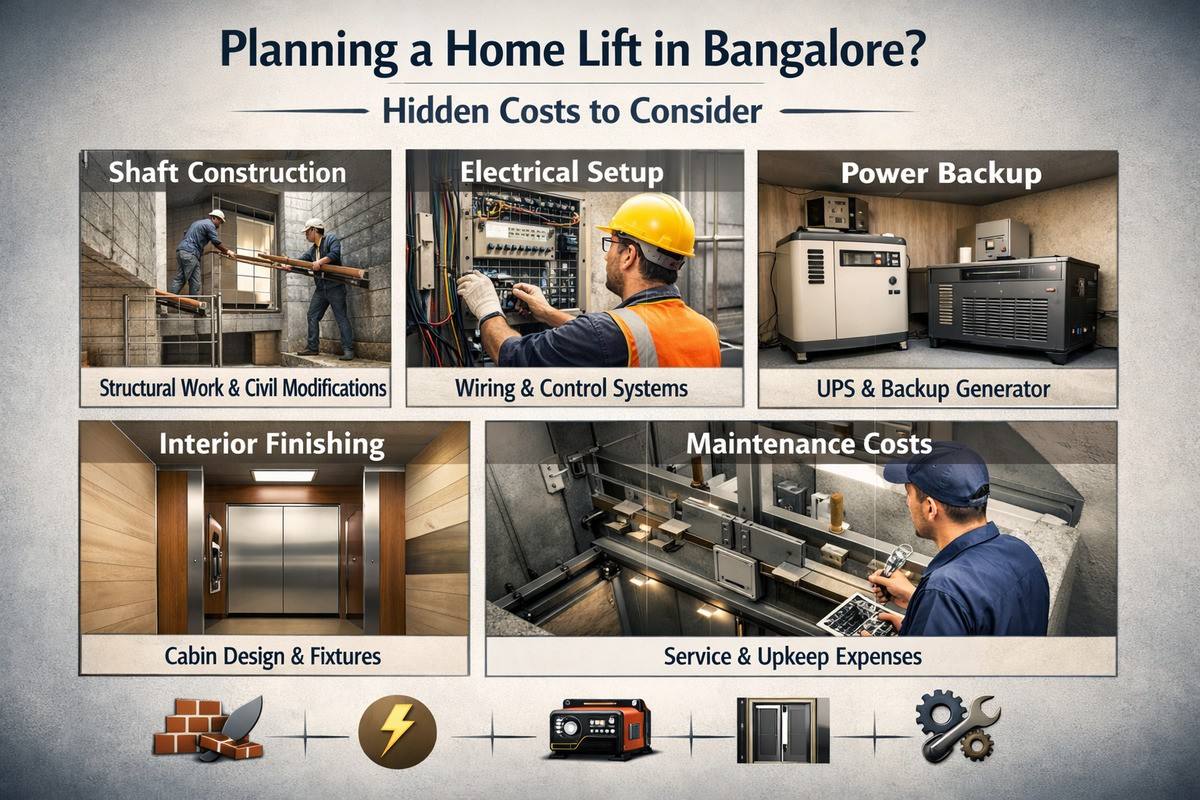
1. Shaft Construction – The Biggest Overlooked Cost
One of the most significant hidden costs in lift installation is building the elevator shaft.
The shaft is the vertical structure where the lift travels. It must be precisely aligned and built according to the lift’s specifications.
Typical residential shaft costs in Bangalore include:
- RCC shaft: ₹2.5 lakh – ₹6 lakh
- Steel structure shaft: ₹3 lakh – ₹8 lakh depending on finishing materials
These costs are often excluded from the elevator supplier’s quotation.
When lift space is included in the architectural design from the beginning, the shaft becomes part of the structure and costs remain predictable. But if the lift is added later, civil modifications can significantly increase expenses.
2. Electrical Preparation and Power Requirements
Every elevator requires a dedicated electrical supply to operate safely.
This includes:
- Separate electrical wiring from the main panel
- Earthing and safety protection
- Control panel wiring
- Landing button circuits
In many homes, electrical upgrades may be required before the lift can be installed.
Electrical preparation typically ranges between ₹50,000 and ₹1.5 lakh, depending on wiring complexity and building layout.
3. Power Backup and Rescue Systems
Power cuts are a practical reality in many Indian cities, which makes emergency systems essential for elevators.
Most modern residential lifts include an Automatic Rescue Device (ARD) that moves the cabin to the nearest floor during a power outage and opens the doors safely. You can learn more in our article are elevators required to be on emergency power.
Some buildings also integrate additional backup systems such as generators or UPS units to keep elevators running during longer outages.
Depending on the building’s requirements, backup power integration can add ₹1 lakh – ₹3 lakh to the total project cost.
4. Structural Adjustments in Existing Buildings
Installing a lift in a new building is usually straightforward because the shaft and staircase layout are designed around it.
But retrofitting a lift into an existing home can introduce hidden costs such as:
- Staircase redesign
- Slab cutting and reinforcement
- Adjusting landing levels
- Strengthening structural columns
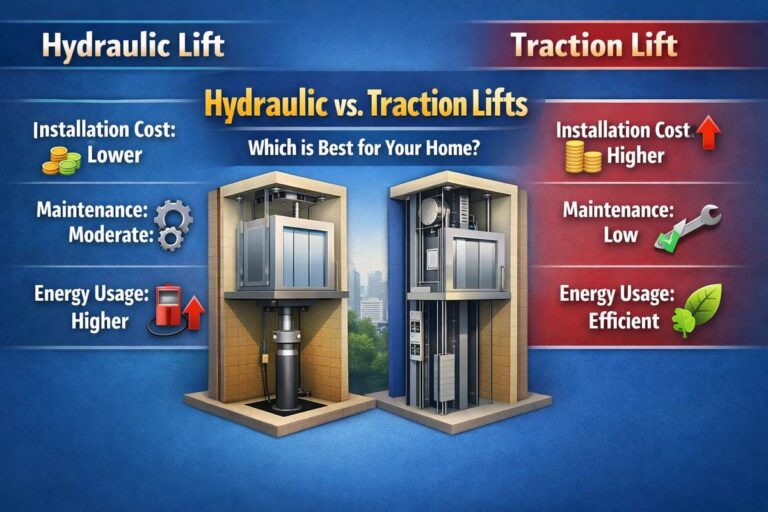
Some retrofit projects also choose hydraulic systems because they require less overhead space. If you are unsure about how hydraulic lifts work, our article are elevators hydraulic explains the mechanism in simple terms.
These structural modifications vary widely depending on the building’s layout, which is why retrofit projects often have less predictable budgets.
5. Interior Finishes and Cabin Customisation
Basic elevator pricing usually includes a standard cabin finish.
But many homeowners upgrade the interior to match the home’s design, which increases the cost.
Common upgrades include:
- Stainless steel panels
- Glass cabins
- Decorative laminates
- Premium lighting
- Touch control panels
While these upgrades improve aesthetics, they can add ₹50,000 to several lakhs depending on design preferences.
6. Annual Maintenance and Compliance
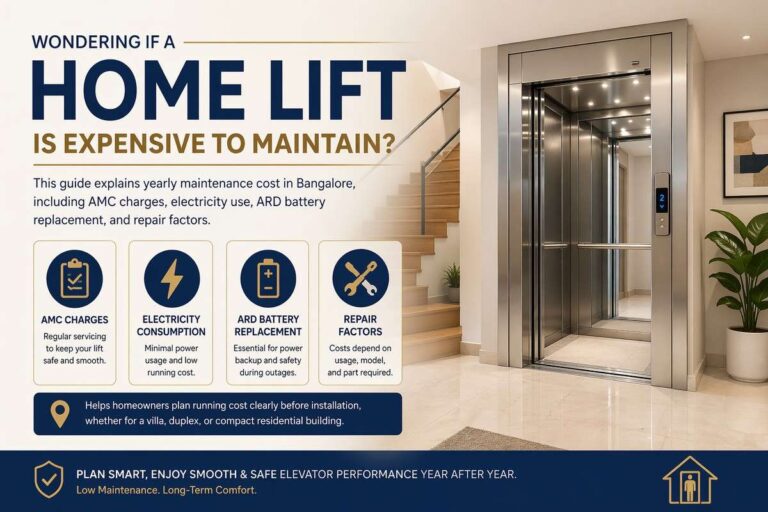
Another cost that homeowners sometimes overlook is ongoing maintenance.
Elevators are mechanical systems that require regular servicing to ensure safe operation and compliance with safety regulations.
Residential lift maintenance in Bangalore typically ranges between:
₹25,000 – ₹60,000 per year depending on system type and usage.
Maintenance generally includes inspection of braking systems, alignment checks, sensor calibration, and testing of emergency devices.
Skipping maintenance may reduce short-term expenses but can increase the risk of breakdowns and inspection issues later.
7. Inspection and Regulatory Compliance
Elevators are regulated systems in India and must meet safety standards before operation.
Before commissioning, lifts are inspected by authorised government lift inspectors under state lift regulations.
Building owners must also maintain proper documentation and periodic inspection approvals to keep the lift operational.
Although inspection fees themselves are usually modest, the compliance process requires proper installation, documentation, and maintenance records. For detailed information read our article on who inspects elevator in Bangalore.
8. Why Planning the Lift Early Saves Money
Most hidden costs arise when the lift decision is taken after construction has already progressed.
When the elevator is planned during the architectural stage:
- Shaft dimensions are correctly designed
- Electrical provisions are prepared in advance
- Structural modifications are avoided
- Installation becomes faster and more predictable
Early planning not only reduces cost surprises but also improves long-term performance and safety.
9.Final Thoughts
The price of a home elevator is often discussed in terms of equipment cost, but the real investment includes much more. Civil construction, electrical infrastructure, backup systems, interior finishes, and maintenance all contribute to the final figure.
For most residential projects in Bangalore, the complete lift installation cost can vary widely depending on structural readiness and design choices.
Understanding these hidden costs early helps homeowners plan their building budget realistically and avoid unexpected expenses during installation.
At Evonic Pro Elevators Pvt. Ltd., we guide homeowners and architects through the entire process — from lift planning during architectural design to installation and long-term maintenance — ensuring each project runs smoothly and transparently.