When the lights suddenly go out, one of the first thoughts people have is—what happens to the elevator?
It’s a common question among homeowners, builders, and facility managers alike. Power failures can happen anytime, and the idea of being stuck inside a lift understandably raises concern. So, are elevators required to be on emergency power? The answer depends on the building type, usage, and safety codes that govern elevator installations in India.
Let’s take a detailed look at what emergency power means, when it’s mandatory, and why it’s becoming a standard feature in most modern elevators.
1. What Happens to an Elevator During a Power Failure
In older systems without backup power, a sudden power cut simply stops the elevator mid-travel. The car halts wherever it is in the shaft, and passengers must wait until power returns or technicians manually rescue them.
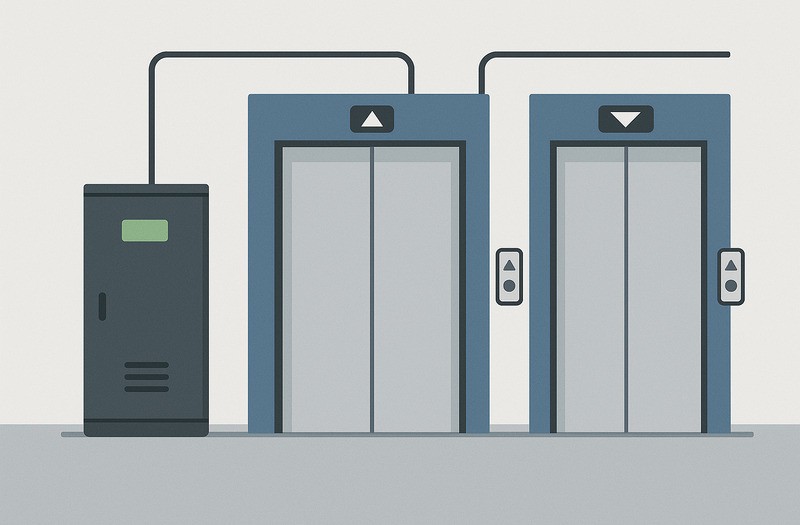
However, today’s elevators are designed to prevent that scenario. Most modern systems—especially those installed by Evonic Pro Elevators—include an Automatic Rescue Device (ARD). When power is lost, the ARD immediately activates, drawing energy from a built-in battery. It brings the car safely to the nearest floor, opens the doors, and allows passengers to exit calmly.
This process usually takes less than a minute and works automatically. Even if the main power supply is completely off, the ARD’s internal battery ensures no one is ever trapped inside. It’s one of the most important safety features in any modern lift system and now a regulatory requirement under most Lift Acts in India.
2. Is It Legally Required for Elevators to Have Emergency Power?
The short answer: Yes, in many cases it is mandatory—especially for public, commercial, and hospital buildings.
In India, elevator safety and design standards are governed by the Bureau of Indian Standards (BIS) and various State Lift Acts and Rules. These regulations ensure every elevator is designed, installed, and maintained according to strict safety norms.
Here’s what the key standards say:
- IS 14665 (Parts 1–5) – The primary Indian standard for electric lifts. It specifies that every passenger elevator must include safety mechanisms to ensure safe operation during a power outage, including provisions for ARD or equivalent rescue systems.
- IS 15259 – Governs hydraulic lifts, stating that power failure safety measures must be in place to prevent entrapment.
- IS 15330 – Outlines inspection and maintenance procedures, requiring periodic testing of all emergency systems.
Alongside these national standards, state governments enforce Lift Acts. For example, the Karnataka Lifts, Escalators, and Passenger Conveyors Act, 2012 mandates that lifts in licensed buildings must have emergency rescue systems and be equipped to handle power failures safely. Similar acts exist in Maharashtra, Tamil Nadu, Gujarat, and Delhi.
In simpler terms:
- Commercial buildings, hospitals, malls, and high-rise apartments are required to have emergency power systems.
- Private residences or small villas are strongly recommended to include them, though they may not always be legally enforced.
3. Common Emergency Power Options Used in Elevators
Not all emergency systems are the same. Depending on the building type and elevator design, different backup solutions are used to keep passengers safe and the lift functional during a blackout.
a. Automatic Rescue Device (ARD)
The ARD is the most common and cost-effective system. It uses a rechargeable battery that activates instantly during a power failure.
Function: Moves the elevator to the nearest floor and opens doors.
Backup Duration: Typically one rescue cycle (around 30–60 seconds).
Best For: Homes, apartments, and small offices.
b. Diesel Generator (DG Set)
In larger buildings, a diesel generator provides power to the entire facility, including elevators, lighting, and fire systems.
Function: Takes a few seconds to start automatically after a power cut. Once active, the elevator operates normally.
Backup Duration: Several hours or as long as fuel is available.
Best For: Commercial complexes, hospitals, and multi-lift systems.
c. Uninterruptible Power Supply (UPS)
Some modern buildings use UPS systems for smoother transitions. These devices bridge the short gap between power failure and generator startup, ensuring no elevator shutdown even for a few seconds.
Function: Provides instant power while the DG set starts.
Best For: Hospitals, IT parks, and critical infrastructure where downtime must be zero.
4. Do All Elevators Need Emergency Power?
Not necessarily—but it’s increasingly becoming a best practice rather than a luxury.
Here’s a quick breakdown by building type:
- Hospitals: Mandatory. Life safety systems, including elevators, must remain operational during power cuts for patient transport.
- Commercial and High-Rise Buildings: Mandatory under state Lift Acts and BIS standards.
- Residential Apartments: Usually mandatory if above a certain number of floors (as per local regulations).
- Private Homes/Villas: Not legally required but highly recommended for convenience and safety, especially in areas with frequent outages.
From a regulatory standpoint, state inspectors often require proof of functional ARD systems before issuing an annual lift safety certificate. Even for smaller home elevators, builders today prefer including ARD or UPS backup as a standard feature—because getting stuck inside a lift is not only uncomfortable but also avoidable.
5. Maintenance and Safety Implications
Having an emergency power setup is one thing; maintaining it is another.
Backup systems, especially ARD batteries, degrade over time. Without periodic inspection, they may fail right when they’re needed most.
At Evonic Pro Elevators, our maintenance process includes:
- Quarterly Testing of ARD activation and battery charge.
- Load Simulations to ensure the elevator responds correctly during simulated power cuts.
- Battery Replacement as per manufacturer guidelines.
- Integration Checks for generators and UPS systems to verify automatic switchover timing.
We also guide building owners through compliance checks during state inspections, helping maintain valid Lift Certificates without hassle.
In India’s power-sensitive environment, where outages can happen unexpectedly, these checks ensure uninterrupted peace of mind.
6. Why Backup Power Makes Practical Sense
Even beyond compliance, emergency power offers clear advantages:
- Safety: Immediate evacuation prevents panic or health issues for trapped passengers.
- Convenience: Continuous operation in hospitals, offices, and high-traffic buildings.
- Reliability: Protects your elevator system from sudden voltage drops and restarts.
- Resale Value: Adds credibility and safety assurance to property buyers.
According to BIS data, over 70% of new elevators installed in urban India now include ARD or integrated backup systems, compared to less than 40% a decade ago. This trend reflects growing awareness among users and developers about the importance of uninterrupted mobility.
7. Final Thoughts
So, are elevators required to be on emergency power?
For most public, commercial, and healthcare buildings — yes, absolutely. For private homes and small offices — it’s not always legally required, but strongly advised.
An elevator without emergency power is like a car without a spare tyre: it may work fine most days, but it’s unprepared for the unexpected. Backup systems like ARD, UPS, or generators ensure that even during power failures, passengers are never left in the dark.
At Evonic Pro Elevators Pvt. Ltd., we ensure every system—whether for a home, hospital, or high-rise—includes reliable safety mechanisms tested under real conditions. Because power may fail, but passenger safety never should.